Prof. Eldar Kurbanov
Volga State University of Technology (Russia)






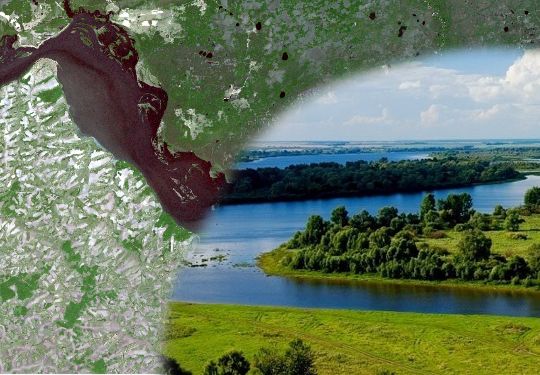
As more scientific information about global warming accumulates, climate change is emerging as perhaps the greatest environmental challenge of the 21st century (FAO). On the global level forest ecosystems play a major role in climate change: they remove and store carbon from the atmosphere in their biomass, soils and products; when managed sustainably, they produce wood fuels as a benign alternative to fossil fuels; and provide cost-effective mitigation solutions. Over the past four decades, the use of space-borne sensor data provided unique advances for professional community to estimate forest ecosystems. Remote sensing techniques become unprecedented alternative option to expensive and time consuming field measures in monitoring of forest ecosystems over large and remote geographic areas. While essential progress has been achieved in the field, there remains a critical need for integrated understanding of the resilience and vulnerability of the forest ecosystems at the regional and global scale. The conference is aimed at promoting the exchange of new research ideas and practices on the use of remote sensing in estimation of forest ecosystems and tackling the issues of climate change.
Since 2010 “Forest ecosystems in the conditions of climate change: biological productivity and remote sensing” (FORECOS) has become an annual international conference on the application of remote sensing technologies for monitoring and assessment of forest ecosystems. The conferences have been supported by NASA-LCLUC programme, EU Tempus, EU Erasmus, IUFRO (International Union of Forestry Research Organizations), and EFI (European Forest Institute). The Conference is organized by the staff of Centre of Sustainable Forest Management and Remote Sensing of the Volgatech (Yoshkar-Ola, Russia).


Volga State University of Technology (Russia)
University of Aristotle in Thessaloniki (Greece), Guest Editor
Space Research Institute (Russia)
Fujian Normal University (China)
09.00 – 11.20 Plenary session
11.20 – 11.40 Break
11.40 – 12.50 Plenary session
09.00 – 10.50 Plenary session
10.50 – 11.20 Break
11.20 – 12.50 Plenary session
